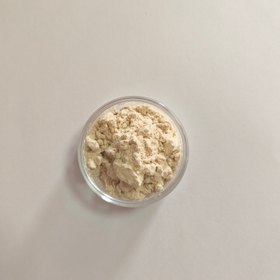
We have compiled a list of manufacturers, distributors, product information, reference prices, and rankings for Decomposed powder.
ipros is IPROS GMS ・ IPROS One of the largest technical database sites in Japan that collects information on.

Decomposed powder - List of Manufacturers, Suppliers, Companies and Products | IPROS GMS

Decomposed powder Product List

1~5 item / All 5 items

Displayed results

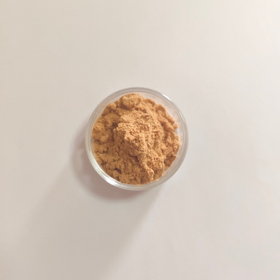
Korean ginseng, wild ginseng, enzyme-decomposed powder, ginsenoside, high water solubility.

An enzyme-decomposed ingredient that differs from general Korean ginseng powder and extract powder. Processed into a highly water-soluble powder containing ginsenosides, polysaccharides, peptides, and amino acids.

This product is an enzyme-decomposed powder made from Korean ginseng (Panax ginseng). Unlike typical Korean ginseng powders that are simply ground or extracts that are produced through extraction and concentration, this product is characterized by the application of complex enzyme treatment directly to the raw material itself. The raw material used is Korean ginseng cultivated in the Changbai Mountain region. It undergoes treatment with complex enzymes under low-temperature conditions to promote the decomposition and solubilization of high molecular components such as polysaccharides and proteins contained in Korean ginseng. This processing method aims to minimize the effects of heating while retaining as many components derived from the raw material as possible. It contains approximately 5% ginsenosides and about 5% crude polysaccharides, as well as peptides and amino acids derived from Korean ginseng. This raw material is suitable for food and beverage products that aim to incorporate a wide range of components derived from Korean ginseng. Due to its powder design that considers solubility in water, it can also be applied to aqueous products, which have been difficult to formulate with conventional Korean ginseng powders. It addresses needs such as "I want to use Korean ginseng raw materials, but it's hard to differentiate with typical powders or extracts," "I'm looking for a new raw material form that contains components derived from Korean ginseng," and "I want to develop specially processed raw materials through enzyme treatment."

  • Food ingredients (powder)
  • Food/beverage functional materials
  • Decomposed powder

Added to bookmarks

Bookmarks list

Bookmark has been removed

Bookmarks list

You can't add any more bookmarks

By registering as a member, you can increase the number of bookmarks you can save and organize them with labels.

Free membership registration

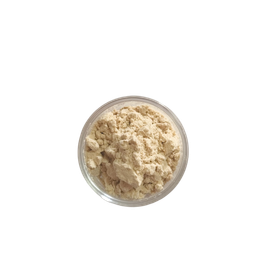
Goji berry (wolfberry) enzyme decomposition powder, 40% polysaccharides derived from goji, high water solubility.

A method of enzymatic decomposition that differs from the general goji berry extract. Goji berries from Ningxia are treated with a complex enzyme to produce a highly water-soluble powder containing 40% polysaccharides derived from goji berries.

This is an enzyme-decomposed type of goji berry (wolfberry) raw material made from goji berries (Lycium barbarum) produced in Ningxia, China. Known overseas as goji berries, these berries are processed not only through conventional extraction and concentration methods but also by combining treatment with complex enzymes. The main feature of this product is "enzyme decomposition." The goji berries undergo complex enzyme treatment, followed by processes of centrifugation, filtration, purification and concentration, and spray drying to produce a powdered form. This processing method differs from typical goji berry powder or goji berry extract, resulting in a powdered raw material that is easier to incorporate into aqueous products. It contains polysaccharides and oligosaccharides derived from goji berries, with the standard value for goji-derived polysaccharides set at 40%. This raw material is suitable for product development by food and beverage manufacturers, health food manufacturers, and supplement manufacturers looking to utilize a wide range of components found in goji berries. It features high water solubility, making it applicable to various food forms such as powdered beverages, solid beverages, liquid beverages, tablets, jellies, and gummies.

  • Food ingredients (powder)
  • Food/beverage functional materials
  • Decomposed powder

Added to bookmarks

Bookmarks list

Bookmark has been removed

Bookmarks list

You can't add any more bookmarks

By registering as a member, you can increase the number of bookmarks you can save and organize them with labels.

Free membership registration

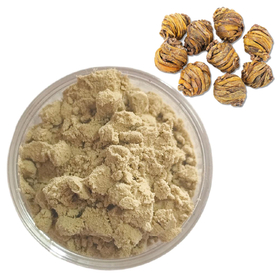
Teppisekkoku Enzyme Decomposed Powder, Dendrobium Polysaccharides 40% or More, High Water Solubility

A method of "enzyme decomposition" that differs from extracts. A next-generation Dendrobium ingredient processed with complex enzymes from Yunnan's Teppeisekkoku, achieving over 40% Dendrobium polysaccharides and high water solubility.

This product is a plant-derived powdered ingredient made from Yunnan-produced Dendrobium officinale, manufactured using a "composite enzymatic decomposition" technology that differs from typical simple grinding products or extracts. By combining enzymes such as cellulase and pectinase and processing plant tissues under mild conditions, it facilitates the solubilization of components like polysaccharides in the raw material. The processing minimizes excessive thermal stress, allowing for a design that preserves the original composition of the raw material. The main feature is that it is an "enzymatically decomposed powder" that enhances water solubility through enzymatic treatment, rather than a typical "Dendrobium extract" that has been concentrated and dried. It has high clarity when added to water and is designed to minimize sedimentation, making it a suitable ingredient for powdered beverages, liquid drinks, tablets, and solid drinks. As quality indicators, the measured values of Dendrobium polysaccharides are 41.34% and Dendrobium flavonoids are 0.78%. Dendrobium polysaccharides are known as one of the key components that characterize Dendrobium officinale and are gaining attention in the health food and beauty food sectors. In contrast to standard powders that face challenges in solubility and blendability, the enzymatic decomposition processing technology itself can be proposed as added value.

  • Food ingredients (powder)
  • Food/beverage functional materials
  • Cosmetic materials and raw materials
  • Decomposed powder

Added to bookmarks

Bookmarks list

Bookmark has been removed

Bookmarks list

You can't add any more bookmarks

By registering as a member, you can increase the number of bookmarks you can save and organize them with labels.

Free membership registration

Jujube (Natsume) enzyme-decomposed powder, high water solubility, jujube-derived polysaccharides.

An enzyme-decomposed raw material that differs from general jujube powder and jujube extract powder. It is treated with a complex enzyme and processed into a highly water-soluble powder containing polysaccharides and oligosaccharides derived from jujube.

This is a plant-derived powdered ingredient made from carefully selected jujubes (Ziziphus jujuba) using an enzyme decomposition method. Jujube is the fruit of the Ziziphus genus in the Rhamnaceae family, known in Japan as "natsume" or "jujube." In addition to being used as dried fruit or food material, components derived from jujube, such as polysaccharides, oligosaccharides, and cyclic adenosine monophosphate (cAMP), are also gaining attention. The main feature of this product is its "composite enzyme decomposition" technology, which differs from typical jujube powders or extracts. Jujubes from Xinjiang are treated with multiple enzymes to process them into a form that is easily soluble while retaining as many of the original components as possible. After enzyme treatment, the product undergoes processes such as separation, purification, and concentration before being powdered. It is designed as an enzyme-decomposed jujube ingredient, distinct from simple ground jujube powder or typical extracts. Containing jujube-derived polysaccharides and oligosaccharides, it is suitable for product development in foods, beverages, and health supplements that utilize components derived from jujube fruit. The powdered form is designed with consideration for solubility and dispersibility in water, allowing for a wide range of product applications, including liquid beverages, powdered drinks, granules, and tablets.

  • Food ingredients (powder)
  • Food/beverage functional materials
  • Decomposed powder

Added to bookmarks

Bookmarks list

Bookmark has been removed

Bookmarks list

You can't add any more bookmarks

By registering as a member, you can increase the number of bookmarks you can save and organize them with labels.

Free membership registration

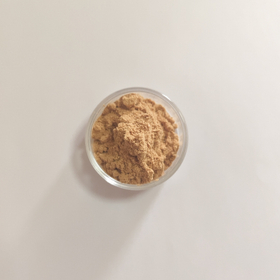
Red ginseng enzyme decomposition powder, high solubility, ginseng-derived polysaccharides, ginsenosides.

A method of enzyme decomposition that differs from general red ginseng extract powder. Red ginseng steamed for over 5 years is treated with a complex enzyme, resulting in a highly water-soluble powder containing components derived from red ginseng.

This product is a type of red ginseng powder that has been processed using complex enzyme treatment, made from red ginseng (Panax ginseng) cultivated for over five years. Red ginseng is a traditional processed ingredient made by steaming and drying the roots of Korean ginseng, and in Japan, it is used in the food and health food sectors under names such as "red ginseng," "Korean red ginseng," "red ginseng powder," and "red ginseng extract." The main feature of this product is the processing method called "enzyme decomposition," which is different from regular red ginseng powder or red ginseng extract powder. The raw red ginseng is treated with complex enzymes to make the components in the raw material more soluble. By utilizing low-temperature conditions, the aim is to minimize the impact of heating while retaining as many of the components derived from red ginseng as possible. It contains polysaccharides and ginsenosides derived from red ginseng and is particularly suitable for product development that seeks a processing form different from typical red ginseng powder. As a powdered ingredient that is easy to incorporate into aqueous formulations, it can be applied to various dosage forms such as powdered beverages, liquid beverages, solid beverages, tablets, gummies, jellies, and nutritional supplements.

  • Food/beverage functional materials
  • Food ingredients (powder)
  • Decomposed powder

Added to bookmarks

Bookmarks list

Bookmark has been removed

Bookmarks list

You can't add any more bookmarks

By registering as a member, you can increase the number of bookmarks you can save and organize them with labels.

Free membership registration